Results at a glance
Customer: eCommerce Fastlane
Industry: Ecommerce media and education
Time to deploy: Same day
The customer
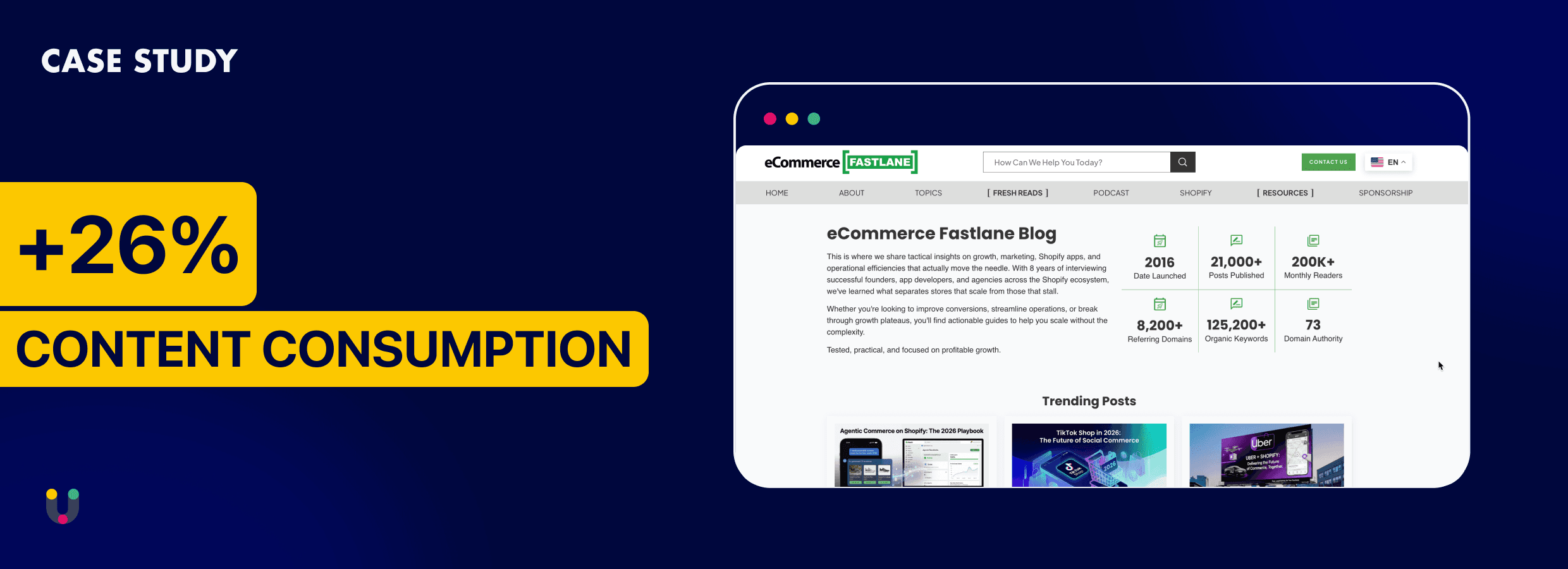
eCommerce Fastlane serves over 300,000 monthly visitors with educational content for Shopify founders and operators. The site has built strong domain authority (DR73) through years of consistent publishing, and traffic was growing - particularly from international audiences.
But founder Steve Hutt noticed a pattern that's familiar to anyone running a content-heavy site: readers would land on an article, consume it, and leave. Not because the content wasn't valuable, but because something in the experience made continuing feel like friction rather than flow.
"Our content library is deep - over 400 podcast episodes, extensive guides, resources for every stage of the ecommerce journey," says Hutt. "The question wasn't whether we had more to offer. It was why readers weren't discovering it."
The challenge
Traditional analytics showed what users did: bounce rates, session duration, exit pages. But it couldn't explain why readers who clearly found value in one article weren't exploring related content.
The hypothesis: micro-delays and interaction latency were creating friction at the exact moments when readers decide whether to continue or leave. Not dramatic failures, but small hesitations - a 320-millisecond delay after clicking, slight layout shifts that create uncertainty, navigation that feels sluggish rather than instant.
These frictions are invisible in standard analytics but compound into real behavior changes.
The solution
Rather than redesigning the site or overhauling editorial workflows, eCommerce Fastlane implemented Uxify's optimization layer to address friction at the interaction level.
The deployment focused on two core capabilities. First, Navigation AI looks at real browsing patterns to anticipate the next step and preloads what’s needed, reducing waiting time between pages. Second, INProve, which reduces interaction delay upon user interaction such as clicks or taps.

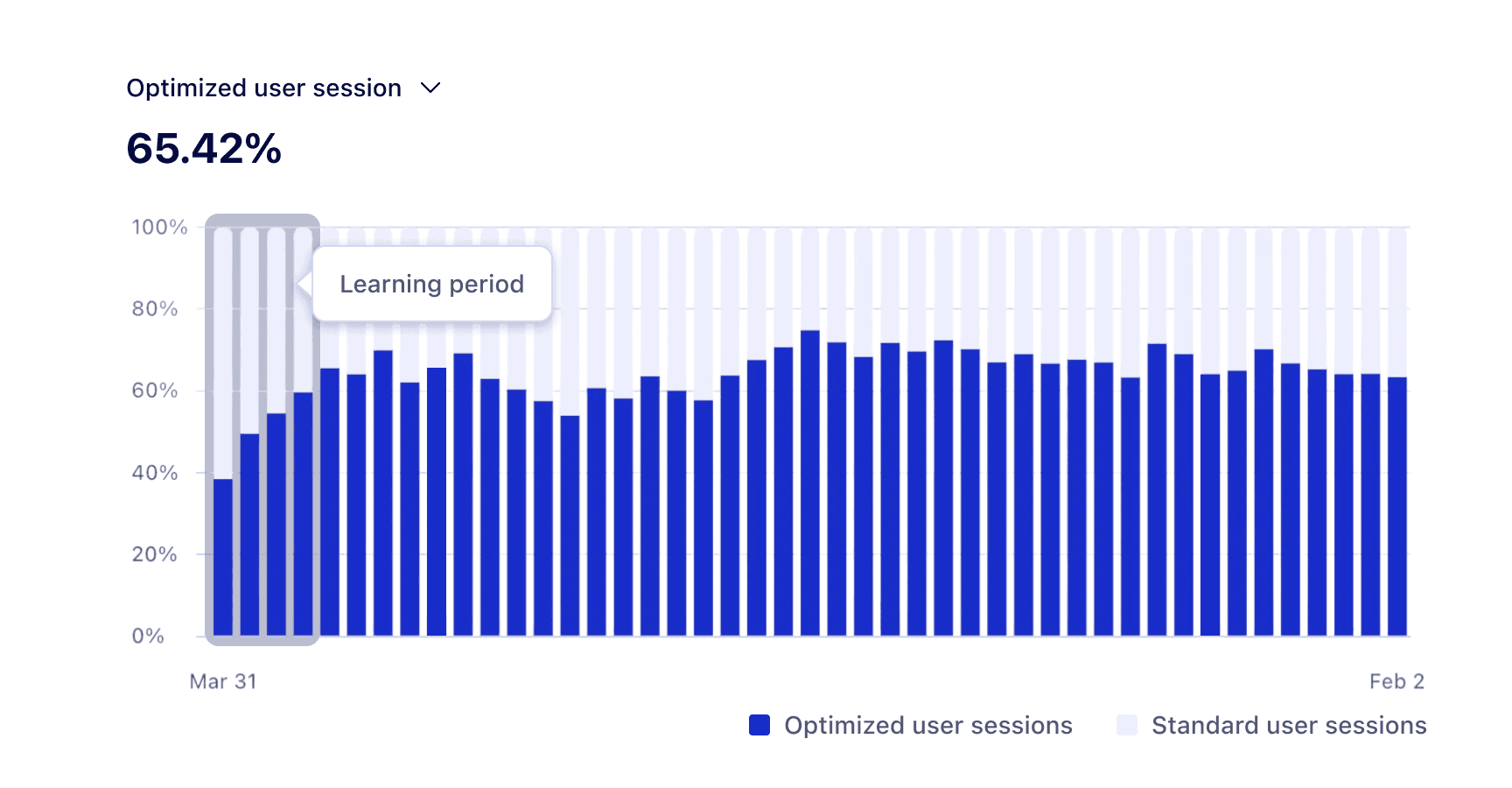
The system requires a learning period to observe real user behavior. Initial improvements appeared within days, with Navigation AI reaching stable performance and correctly predicting the next navigation in roughly 65% of cases after about one month.
"What I appreciated was that this didn't require engineering resources or changes to how we publish content," says Hutt. "Deployment took about 90 minutes, and we were collecting real user data immediately."
The result: faster interactions, more exploration
After activating Navigation AI, eCommerce Fastlane saw clear improvements in how fast and stable the site felt for readers.
Pages loaded significantly faster, with a 39% improvement in Largest Contentful Paint (LCP). At the same time, layout stability improved by 29% as measured by Cumulative Layout Shift (CLS), meaning pages no longer jumped or shifted while readers were trying to interact with them.
As navigation became more predictable and interactions more responsive, user behavior shifted measurably.
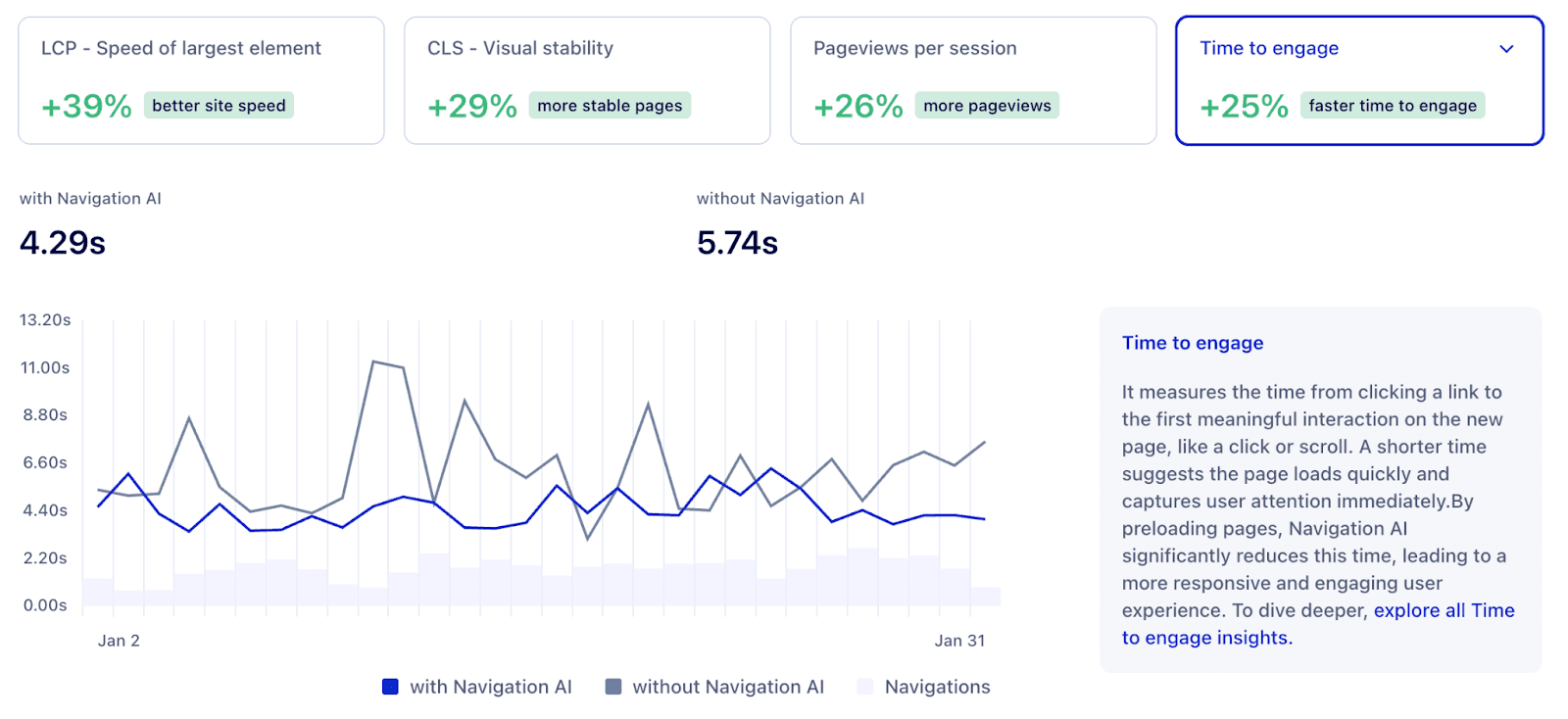
The 26% increase in pageviews per session indicates that readers who previously consumed one article and left were now continuing to explore. The 25% faster time to engagement suggests the site felt more responsive from the first interaction.
These gains indicate that users were more willing to continue to browse additional content once friction at interaction and navigation points was reduced.

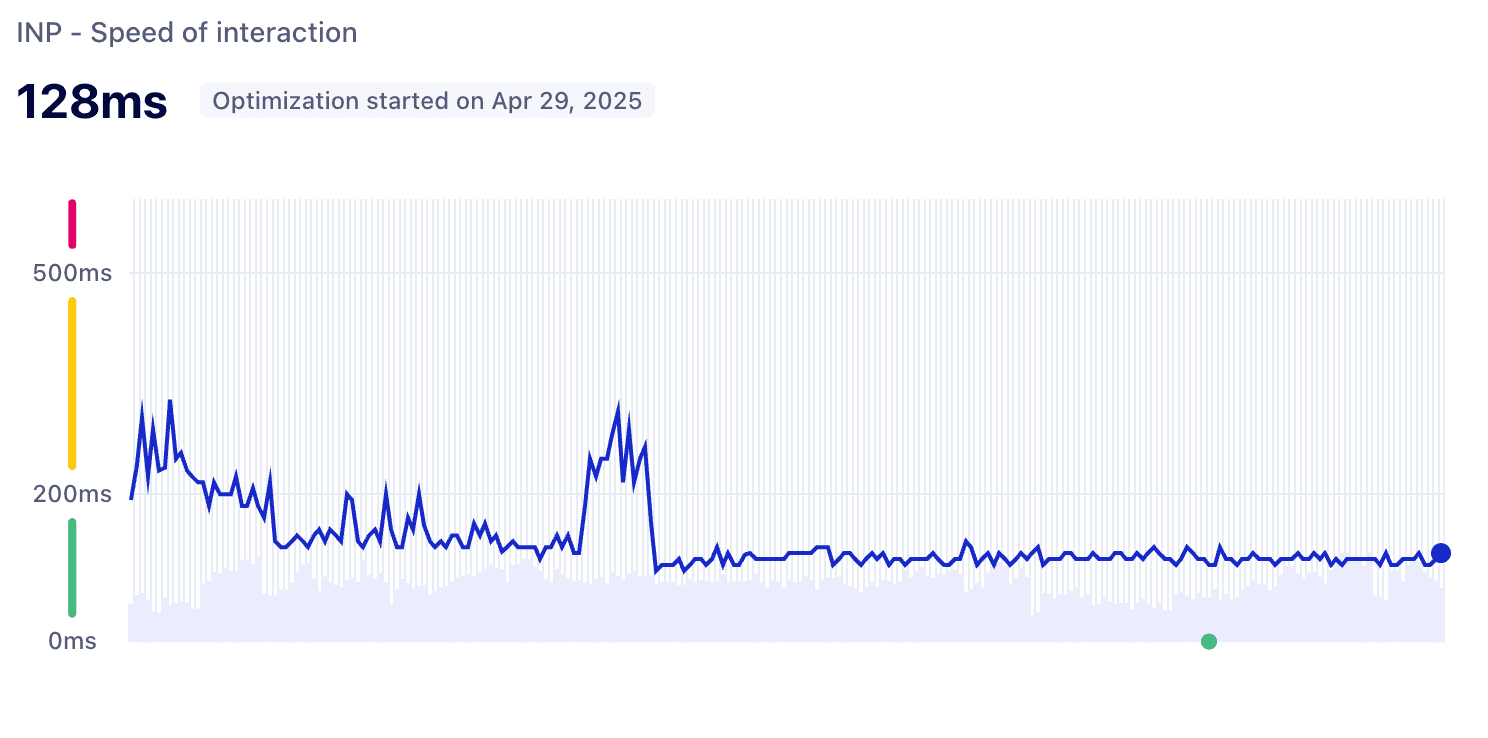
To further improve how the site responded to user input, Uxify’s INProve focused on reducing interaction delays during readers’ actions such as clicks, taps, and scrolls. This resulted in Interaction to Next Paint (INP) dropping from 320 milliseconds to just 128 milliseconds.
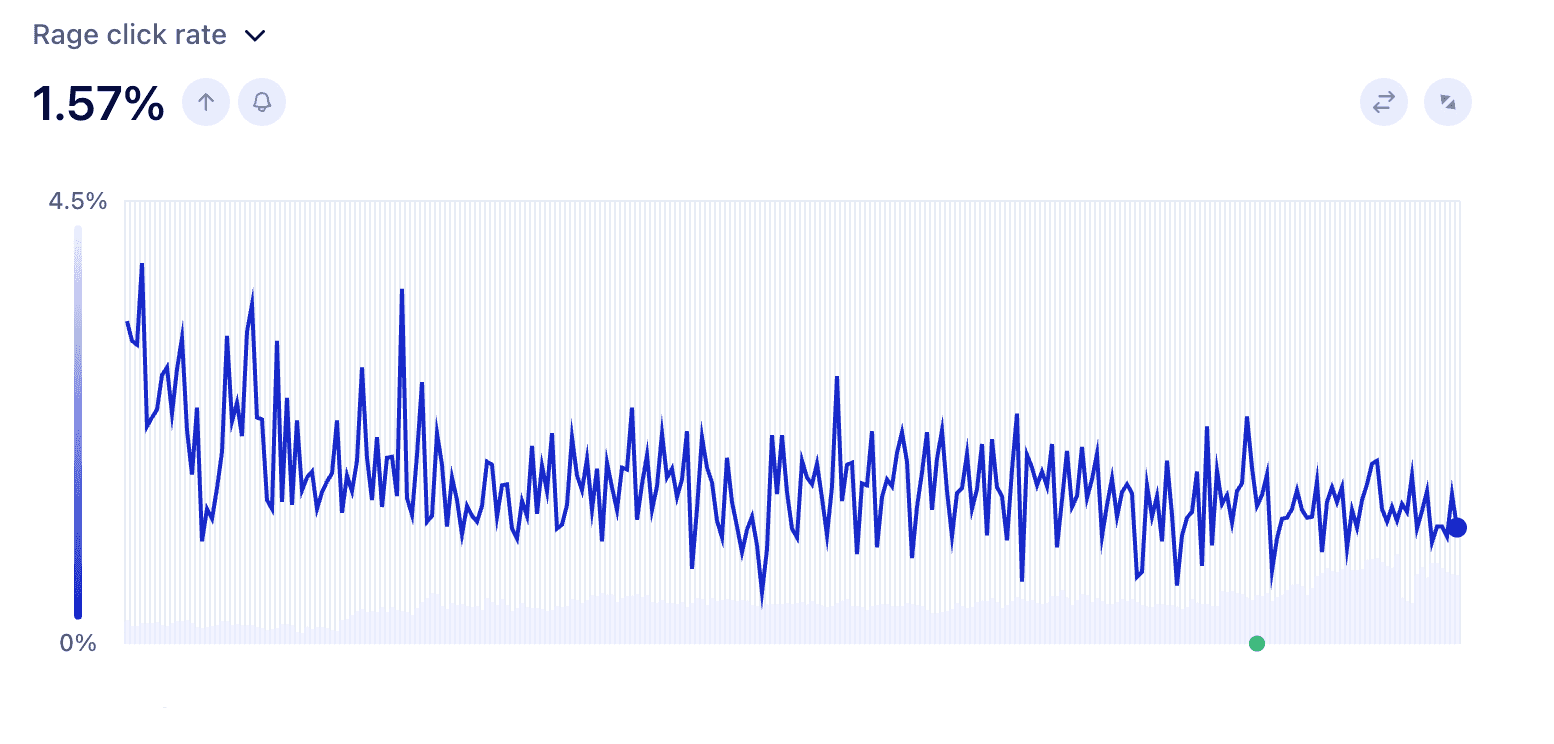
And perhaps most telling: rage clicks dropped from 3.87% to 1.57%. Readers were no longer clicking repeatedly out of frustration or uncertainty - interactions worked the first time.
For a media business, these engagement improvements translate directly to value. More pageviews mean more ad inventory, more affiliate exposure, and more opportunities for newsletter conversion. Deeper sessions signal stronger reader relationships - the kind that make sponsorship conversations more compelling.
Key insights
Small delays create outsized friction. A 320ms interaction delay doesn't sound significant, but it's enough to create hesitation at decision points. Reducing it to 128ms changed how the site feels to use.
Navigation predictability matters as much as content quality. Readers don't consciously think about whether page transitions are fast or slow—but their behavior reflects it. When moving between articles feels effortless, they do it more.
Real user data reveals what analytics can't. Standard metrics show outcomes. Behavioral data shows the friction points causing those outcomes. The difference matters for knowing where to focus.
Optimization compounds over time. The strongest gains appeared after Navigation AI completed its learning phase. Quick wins are possible, but sustained improvement requires the system to understand actual user patterns.
The bottom line
eCommerce Fastlane faced a challenge common to content-heavy sites: strong individual articles, but too many readers leaving before discovering related content. The cause wasn't content quality—it was invisible friction at interaction and navigation points.
By reducing that friction without redesigns or workflow changes, the site saw meaningful engagement improvements within weeks, with peak performance reached after roughly one month.
"The insight that stuck with me is how much user experience at the micro level affects macro behavior," says Hutt. "We didn't change what we publish. We changed how it feels to move through it."
About Uxify
Uxify is a SaaS platform for user intelligence and experience optimization. It combines real user monitoring, AI-powered insights, competitive benchmarking, and automated optimizers to help digital businesses reduce friction and increase engagement without engineering overhead or site redesigns.

" height="200.00000219726564px" id="j9Mmwfnw8" transform="translate(143.5 0)" width="479.5329973144531px"/><path d="M 0 15.944 C 0 7.139 7.154 0 15.98 0 C 24.804 0 31.959 7.138 31.959 15.943 L 31.959 59.637 C 31.959 68.442 39.113 75.58 47.938 75.58 C 56.763 75.58 63.917 68.442 63.917 59.637 L 63.917 15.944 C 63.917 7.139 71.071 0.001 79.897 0.001 C 88.721 0.001 95.875 7.139 95.875 15.944 L 95.875 56.095 C 95.875 82.51 74.413 103.923 47.938 103.923 C 21.462 103.923 0 82.51 0 56.095 Z" fill="rgb(59, 63, 91)" height="103.923px" id="KJCDMITFE" transform="translate(0 53)" width="95.875px"/><path d="M 0 15.943 C 0 7.138 7.154 0 15.979 0 C 24.804 0 31.958 7.138 31.958 15.943 C 31.958 24.748 24.804 31.886 15.979 31.886 C 7.154 31.886 0 24.748 0 15.943 Z" fill="rgb(252, 200, 0)" height="31.885999999999996px" id="q2K9EYOvZ" transform="translate(0 53)" width="31.95799999999963px"/><path d="M 0 15.943 C 0 7.138 7.154 0 15.979 0 C 24.804 0 31.958 7.138 31.958 15.943 C 31.958 24.748 24.804 31.886 15.979 31.886 C 7.154 31.886 0 24.748 0 15.943 Z" fill="rgb(63, 184, 126)" height="31.885999999999996px" id="bBya7XCj7" transform="translate(64 53)" width="31.95799999999963px"/><path d="M 0 14.171 C 0 6.344 6.359 0 14.204 0 C 22.048 0 28.407 6.344 28.407 14.171 C 28.407 21.997 22.048 28.342 14.204 28.342 C 6.359 28.342 0 21.997 0 14.171 Z" fill="rgb(229, 0, 106)" height="28.341999999999985px" id="WNzwBFOi7" transform="translate(34.5 128.5)" width="28.407000000000153px"/></g></svg>)