
CRO analytics platform for better conversions
Fix what's costing you sales by finding out where users drop off, why they abandon carts, and which micro-interactions boost conversions.
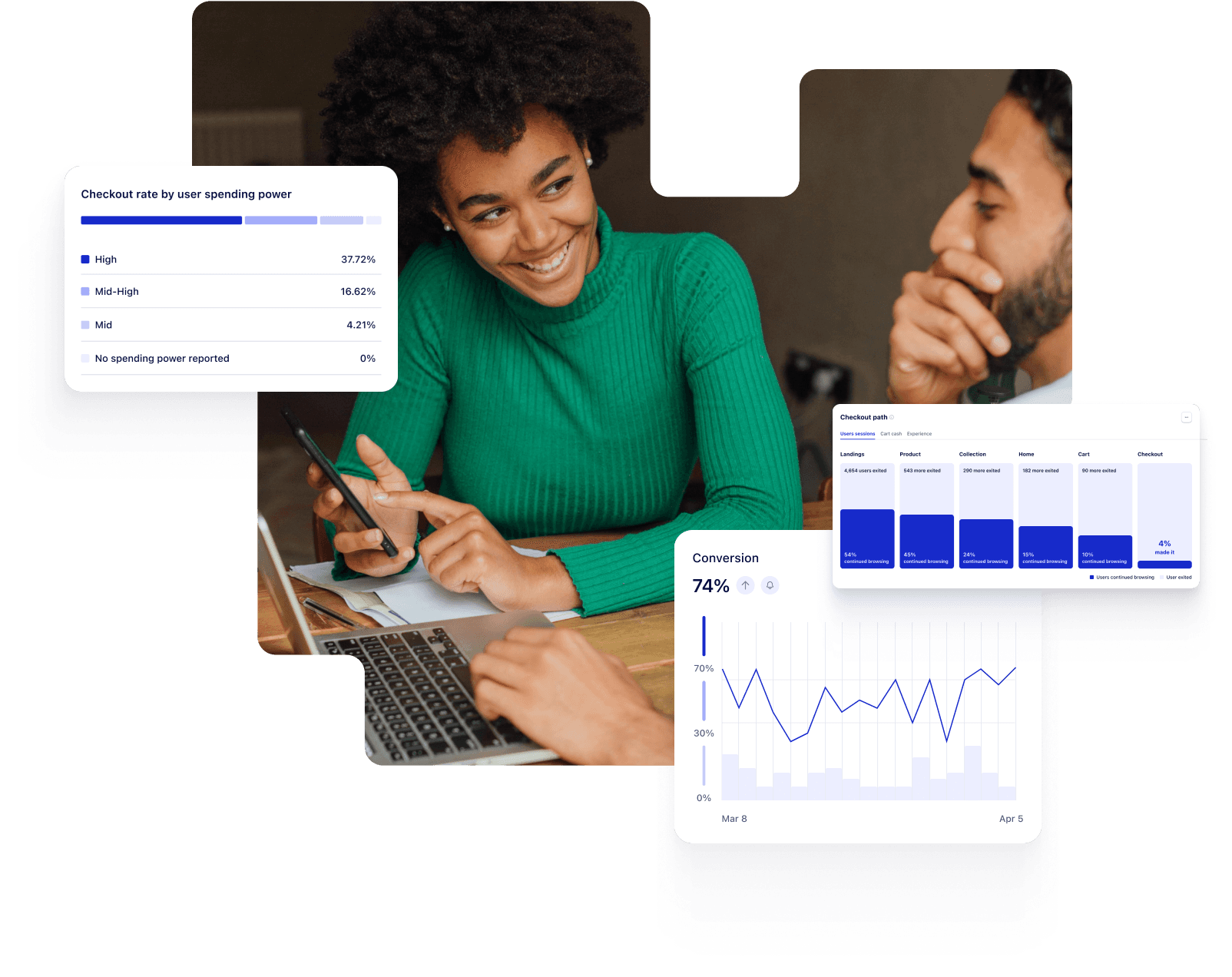
Turn traffic into sales. For real.
Fix what matters
Understand why and when users get frustrated and leave. Track and get notified for 20+ conversion blockers.
Improve what works
Identify your top-converting pages and fastest checkout flows and scale what works.
Prove the lift
Every change ties to conversion, AOV, leads, and revenue. Before/after by cohort. Easy to share. Easy to change.
Everything you need to convert more
Tie every action to sales
Unlike basic analytics, Uxify connects user behavior directly to revenue outcomes. See which micro-interactions lead to purchases, higher AOV, and repeat customers.
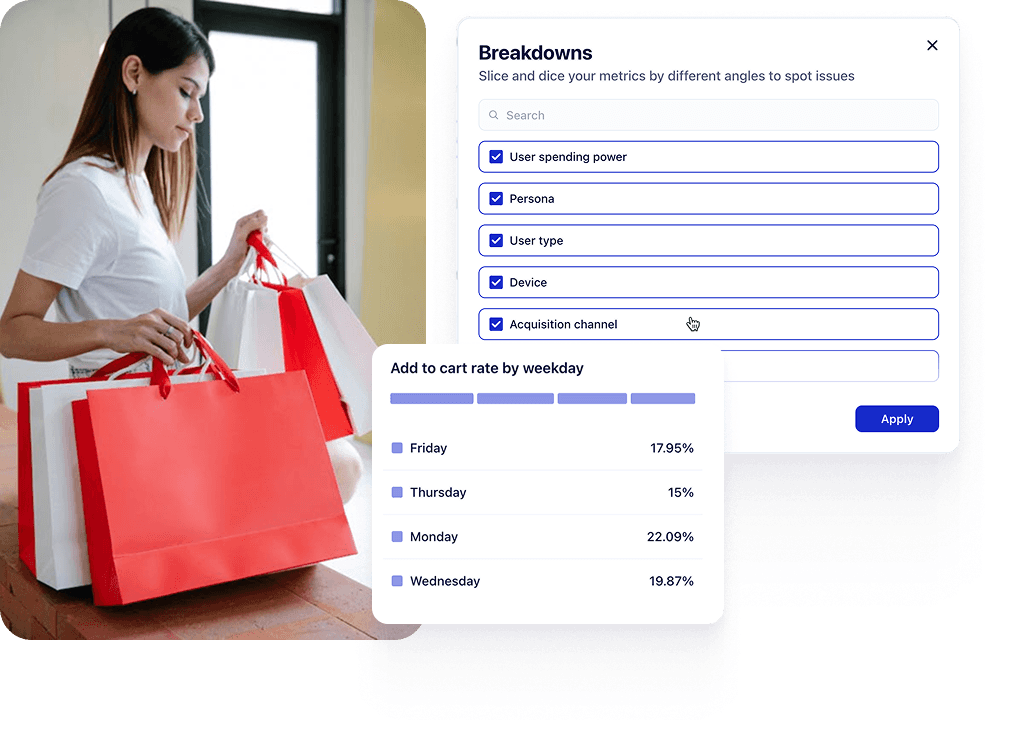
Monitoring and alerts
Get instant alerts when conversion rates drop, checkout flows break, or users hit unexpected barriers. Fix issues before they cost you.
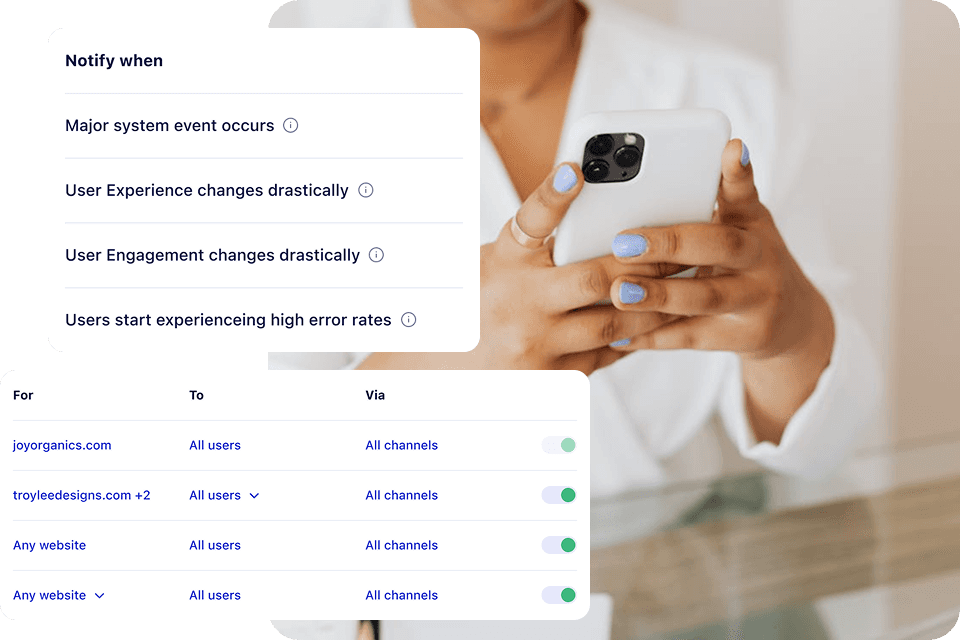
Complete user journey
See the full story of how visitors become buyers. Follow users across their entire journey and get actionable insights on how to maximize conversions.
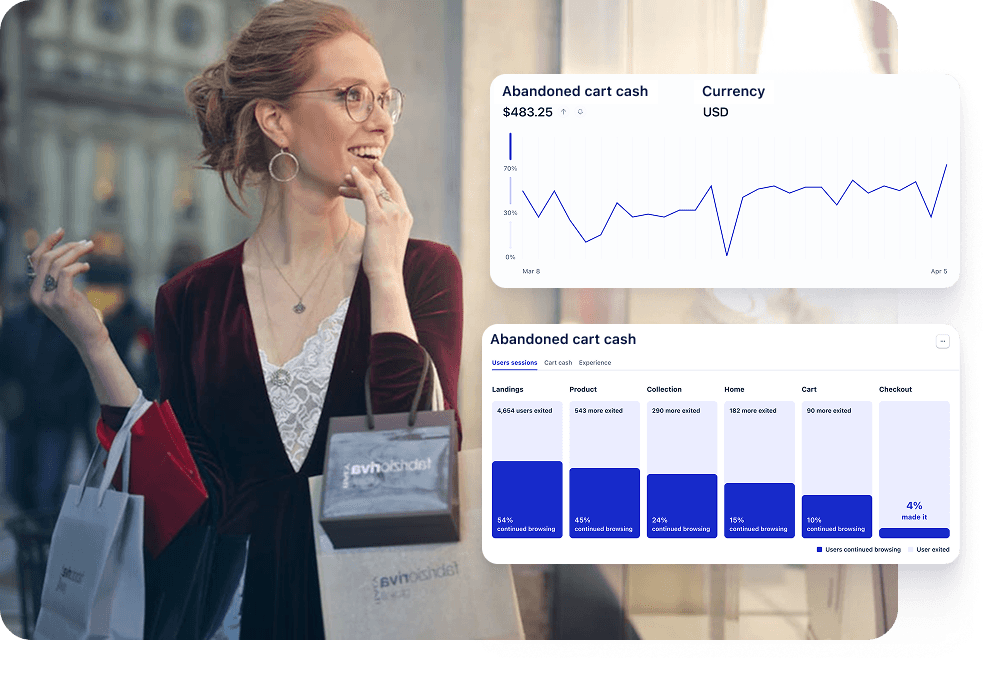
AI-backed conversions
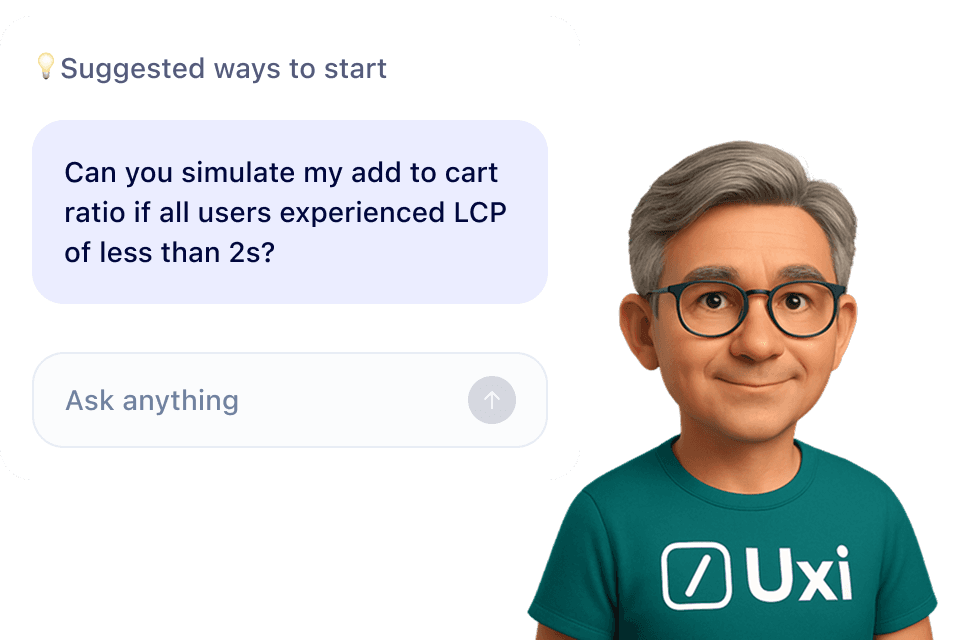
Get AI-powered recommendations for improving conversion rates. From page speed fixes to UX optimizations, know exactly what moves the needle.
Turn frustration into conversion
Without Uxify
- Blame "traffic quality" when conversion rates stay flat
- Run A/B tests without knowing why users actually bounce
- Miss the micro-friction moments that kill purchases
- Wonder if site speed or UX issues are costing sales
With Uxify
- See exactly where and why users abandon their journey
- Connect every user behavior to revenue impact
- Get instant, actionable fixes that boost conversion rates
- Track the complete path from first click to checkout for real outcomes
Everything a CRO manager needs to drive conversions
Navigation AI
Instant paths to purchase.INProve
Keeps every interaction instant.Vita
Guards your Core Web Vitals.Truetap Coming soon
Lands every tap.Carter
Saves carts at checkout.Reel Coming soon
Real friction, clipped.Most common questions
How quickly will I see conversion improvement?
Most users identify their biggest conversion barriers within the first day. Implementation of fixes typically shows measurable results within 2-4 weeks.
Can Uxify track mobile conversion issues?
Yes, including iOS Safari users that other analytics tools miss. See exactly how mobile UX affects your conversion rates.
Does this work for eCommerce and lead generation sites?
Absolutely. Uxify tracks any conversion goal—purchases, signups, downloads, calls, or custom events you define.
What is CRO analytics?
Conversion rate optimization analyzes visitor behavior to improve the customer journey and business outcomes, and to identify new optimization opportunities. Conversion analytics tools focus on reviewing how users behave on landing pages and exactly where they drop off, helping reveal areas for improvement.
How does CRO analytics improve conversions?
CRO (linking to /cro) analytics look at the entire customer experience journey to identify where and how users struggle by reviewing pages, layouts, and website messaging. This helps to understand friction points and provides customer behavior insights to help achieve eCommerce business goals. When done successfully, the insights gained from CRO analytics lead to higher revenue and traffic.
What metrics matter most in CRO analytics?
The most important CRO metrics are conversion rate, funnel drop-off rates, and bounce rate. Additional metrics can include add-to-cart, signups, and checkout progress. Finally, there are also engagement metrics, like page and click-through rates, and A/B test performance.
How do you identify conversion bottlenecks?
The best way to identify conversion bottlenecks is to analyze the precise stage at which potential customers drop off in the funnel. To help do this, you can use heatmaps, session recordings, and funnel tracking. For example, if you suddenly see a sharp drop at the checkout step, it can indicate a serious checkout-related issue.
What's the difference between CRO analytics and web analytics?
The main difference between CRO analytics and web analytics is focus. CRO analytics focuses on specifically improving conversions and optimizing user journeys. Web analytics tools are broader in scope, analyzing overall website performance, traffic, page views, and user behavior. Moreover, UX analytics look at understanding how users interact with digital products. In other words, all three analytics tools work towards the same goal—improving business impact.