











This is the first Black Friday where AI sits firmly and comfortably on both sides of the counter. On one side, merchants are handing more of their store to AI agents: answering customers, watching checkout, writing copy and even changing what's live on the site. On the other, shoppers are sending their own AI assistants to research products, compare offers and decide where to buy.
That raises a question most ecommerce folks haven't had to answer before: how much of your store are you willing to hand over, and at what point do you want a person back in charge? Get it right, and your agents take pressure off your team during the busiest days of the year. Get it wrong, and one bad decision repeats across thousands, causing more harm than it could ever cause good.
Why this BFCM is different
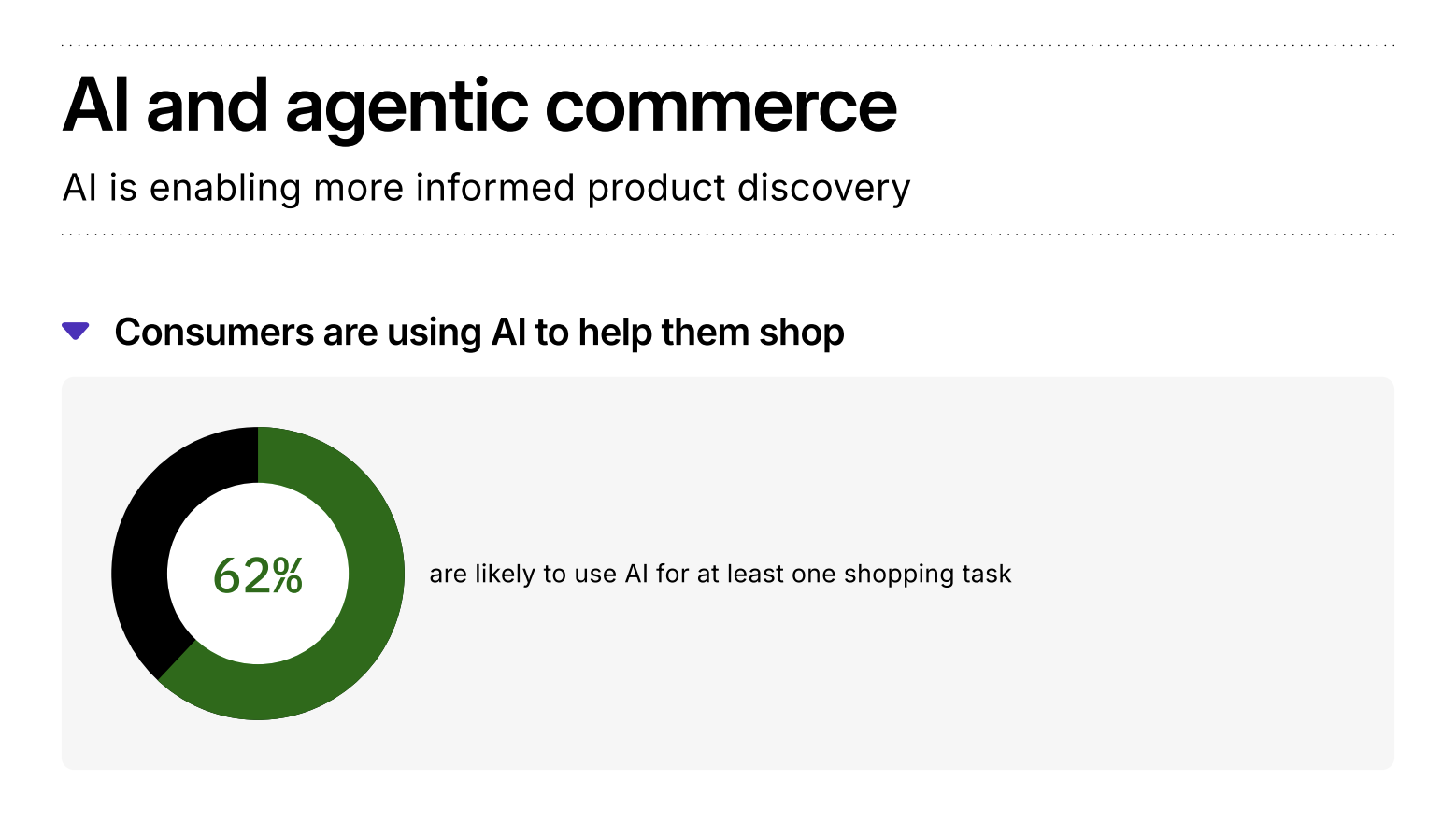
The shopper side of the counter is growing fast. Adobe says AI-driven traffic to U.S. retail sites had already grown 127% year over year by August, and it expects another 130% increase over the holidays. Shopify's data points in the same direction: in Q2 2026, AI-referred sessions to Shopify storefronts grew 197% year over year, orders from the channel roughly tripled, and half of those sessions landed directly on a product page rather than a homepage or collection page.
The merchant side is under more pressure than ever, too. Shopify merchants sold $14.6 billion over BFCM 2025, with sales peaking at $5.1 million per minute, and Adobe expects U.S. online holiday spending to reach $275.1 billion across November and December 2026, with Cyber Week alone accounting for $47.5 billion.
At that pace, there's very little room for an agent to get something wrong.
So this BFCM, there are really two AI questions.
The first is the obvious one: what should you let an AI agent do for your store while traffic is peaking?
The second is newer: what does your store need to do differently now that your customer may have an AI agent of their own?
We put the first question, and variations of it, to thirteen experts who build for Shopify merchants. Their answers follow the path a shopper takes over BFCM:
Before the purchase: Tamir Eden (40rty) on AI shopping agents, Martin Cox (Native App Co) on content and creative, Moran Khoubian (Jurni) on ad landing page optimization, and Tina Donati (ContentCurve) on brand storytelling.
During the purchase: Stoyan Dimitrov (Consentmo) on privacy and consent, Natasha Shine-Zirkel (Loox & Reviewers.com) on reviews and trust, Luca Borreani (Zipchat) on pre-sale conversations, Jake Casto (Layers) on the buying flow, Blake Waldron (Checkout Components) on checkout, and Michaela Lundberg (MindArc) on agent playbooks for peak week.
After the purchase: Andrew Le (Cleverific) on order changes and "where is my order?" questions, and Connor Blakey (GoKwik) on post-purchase messaging.
Here's a summary of what they told us.