

Key takeaways:
- Evaluate your channel requirements and engineering resources carefully before signing an enterprise contract, as the AI platform market remains highly fragmented.
- Teams now expect enterprise tools to use agentic AI, allowing custom conversational AI agents to execute complex workflows and handle unstructured dialogue instead of relying on rigid decision trees.
- The most successful deployments treat AI as a continuous product. Consistent measurement improves the system and maximizes your return on investment.
Make Uxify one of your go-to sources on Google
 Add Uxify on Google
Traditional chatbots, unfortunately, no longer cut it. Enterprises and ecommerce brands need conversational AI tools capable of managing unstructured conversations and running autonomous workflows. Finding a tool that actually fits your security needs and cloud infrastructure takes work, so here’s a look at how the five leading platforms handle large-scale deployment, LLM orchestration, and more.
Best Conversational AI Platforms
Here’s a breakdown of the core conversational AI solutions in the market. We’ve evaluated their specific advantages and constraints in handling complex agentic workflows.\
| Platform | Best for | Deployment | Channels | LLM / NLU approach | Pricing |
|---|---|---|---|---|---|
| Kore.ai | Enterprise scaling | Cloud, on-premise | Omnichannel | Proprietary NLU & LLM integrations | Unpublished |
| Zipchat | Ecommerce brands | Cloud | Omnichannel | LLM trained on site & catalog | From $49/month |
| Google Dialogflow CX | Custom development | Cloud | Web, voice, telephony | Google ML & Vertex AI | $0.007/text, $0.06/voice min |
| Amazon Lex | AWS ecosystems | Cloud | Web, voice | AWS native ML integrations | $0.00075/text request, $0.004/voice request |
| Cognigy | Contact centers (NICE CXone ecosystem) | Cloud, dedicated | Omnichannel | NICE CX models, Bring-your-own | Unpublished |
| Rasa | Developer control | Self-hosted | Custom | Open-source machine learning | Free plan available; enterprise plan pricing is custom |
Kore.ai
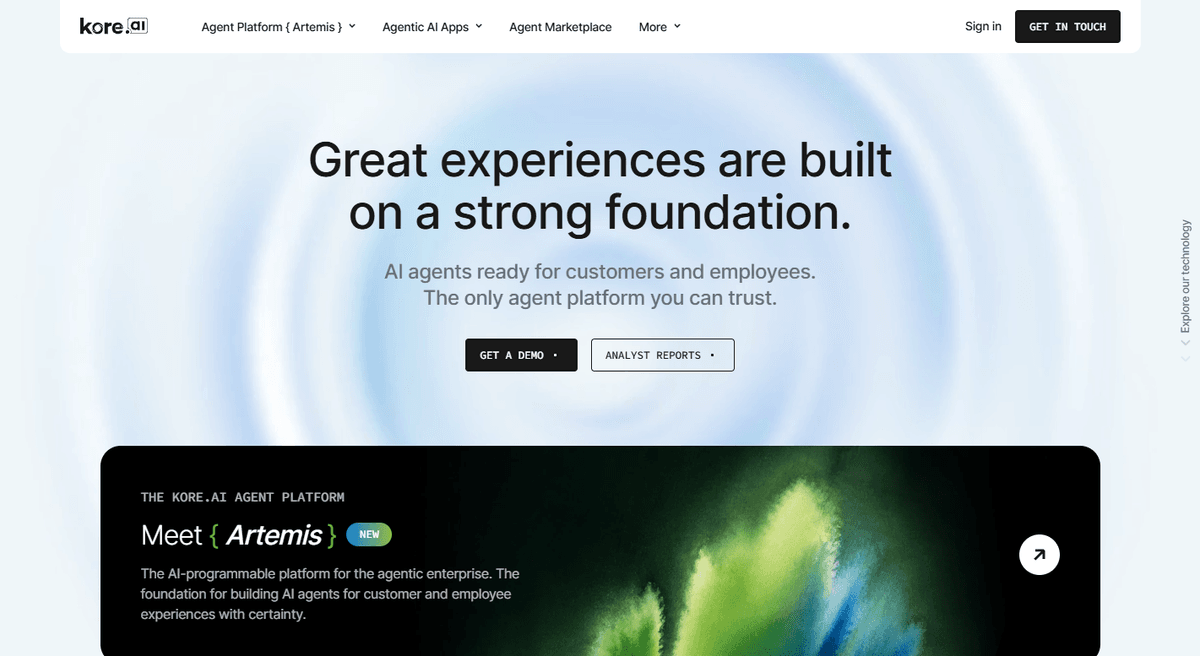
Kore.ai targets large enterprises deploying complex agentic AI workflows. The platform provides extensive integrations across internal channels and offers IT departments the robust administrative, security, and governance controls needed to manage global rollouts.
Pros:
- Deep natural language understanding handles intense variants of human language efficiently.
- Integrates easily with existing enterprise AI platforms (such as Microsoft Azure AI, Google Cloud AI, or IBM Watson) and legacy backend software (such as SAP, Oracle, or on-premise ERP/CRM systems).
Cons:
- Comes with a steep learning curve that makes it difficult for everyday users.
- While Kore.ai doesn’t disclose their pricing, we’ve found the enterprise plan can be around $300,000 a year.
Pricing: Usage-based pricing available; custom enterprise contracts aren’t officially published.
Zipchat
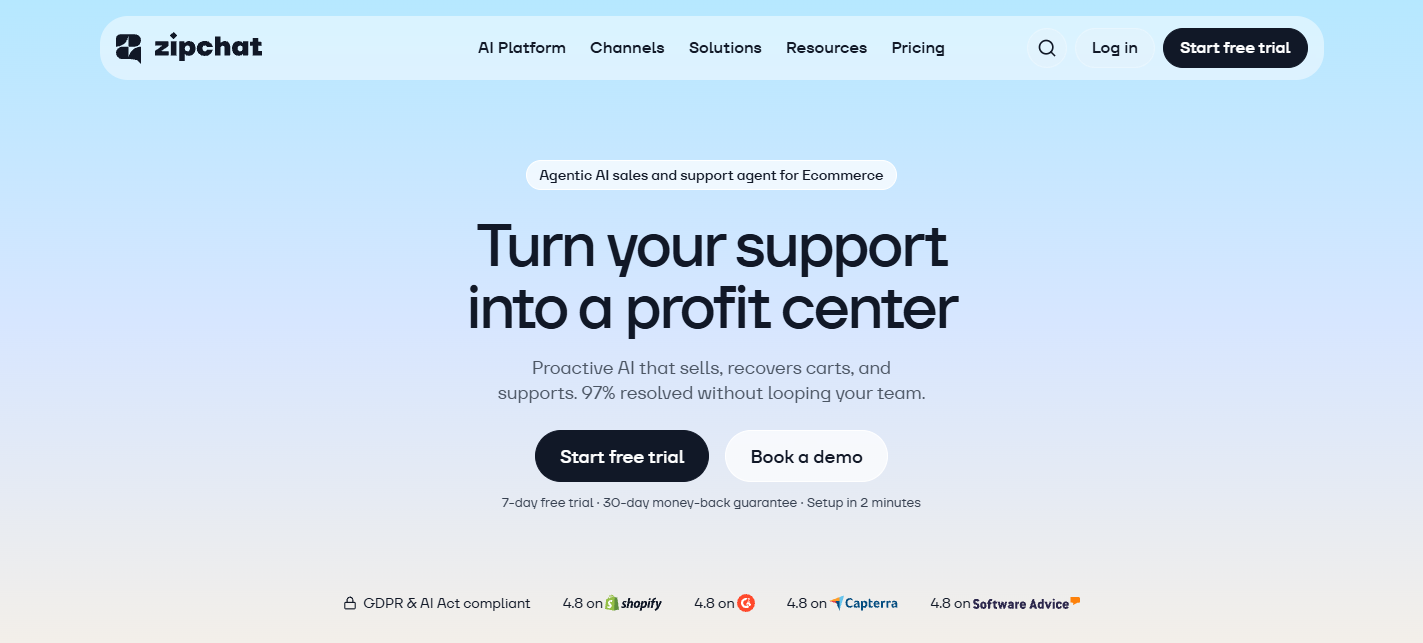
Zipchat is a conversational AI platform built for e-commerce brands that want to sell, support, and retain in one place. The AI learns from your website, product catalog, and policies, then holds human-like conversations in 95+ languages across your website widget, WhatsApp, Instagram, Messenger, and email. It goes beyond answering questions: it recommends products, tracks orders, and generates Shopify discount codes.
Pros:
- Combines an AI chatbot, an AI sales assistant, and a WhatsApp marketing agent in a single platform.
- Auto-crawls your site and catalog to build the knowledge base, so setup takes minutes, not weeks.
- Omnichannel by default: website chat, WhatsApp, Instagram DMs, Messenger, and email share one brain.
- Custom Tools connect the AI to any external API, turning it into an action-taker rather than a FAQ bot.
Cons:
- Purpose-built for commerce and support, not a general-purpose voice or IVR platform.
- Plans are metered by AI replies, so very high-volume stores need to size their tier carefully.
Pricing: Plans start at $49/month (Starter), $129/month (Growth), $249/month (Pro), and $499/month (Scale), with a 7-day free trial and a 30-day money-back guarantee. Enterprise pricing is available on request.
Google Dialogflow CX
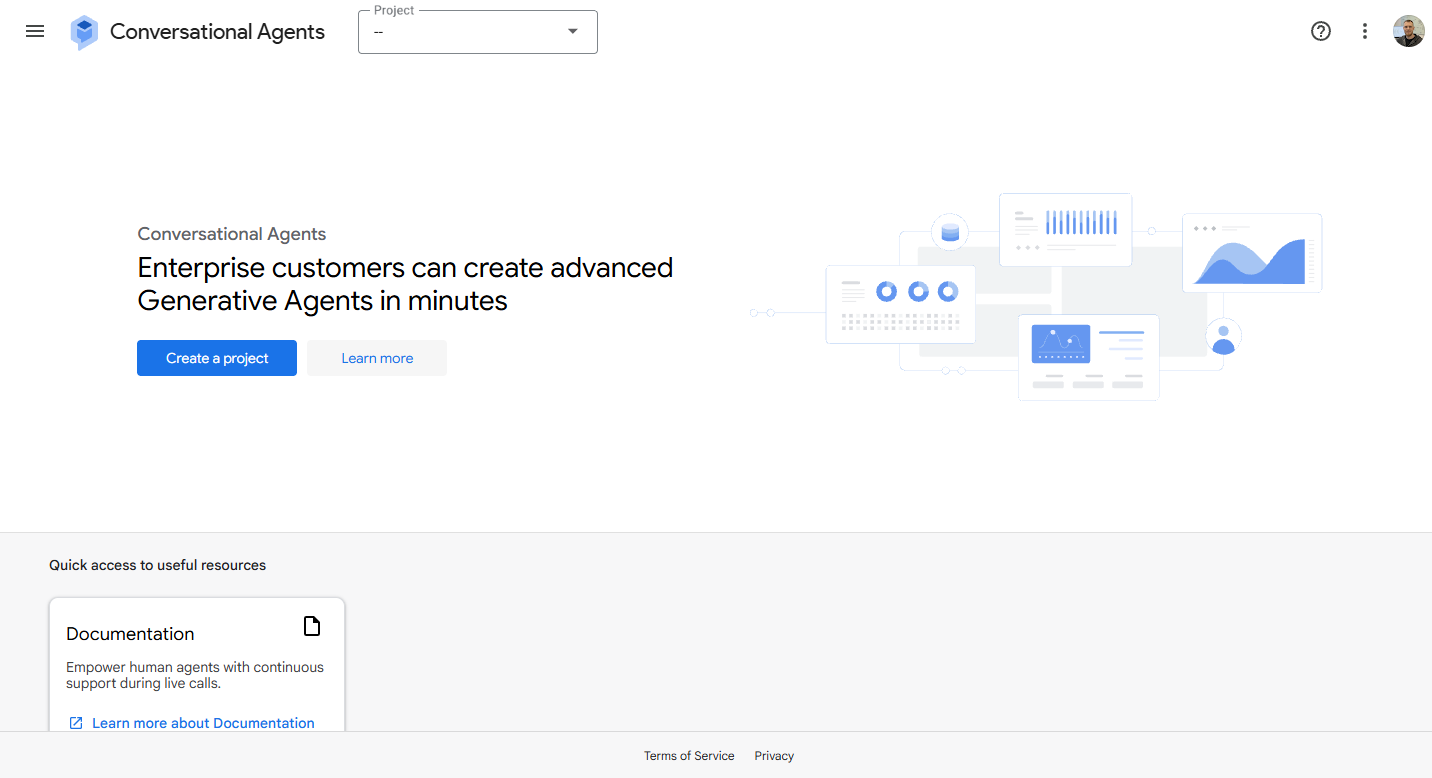
Google Dialogflow CX is designed for development teams building custom AI agents. The platform leverages Vertex AI and Generative AI Playbooks, which allow developers to orchestrate LLM-driven conversations alongside a visual flow builder integrated with Google Cloud infrastructure.
Pros:
- Delivers superb natural language processing out of the box.
- Offers a highly cost-effective structure for technical teams building custom conversational AI platforms.
- One of the strongest and most reliable AI developers in the entire market.
- Easy integration into other Google products.
Cons:
- Requires significant Google Cloud expertise to deploy and maintain.
- Lacks some of the intuitive, no-code visual elements found in alternatives geared toward business users.\
Pricing: Pay-as-you-go model running $0.007 per text request and $0.06 per voice minute.
Amazon Lex
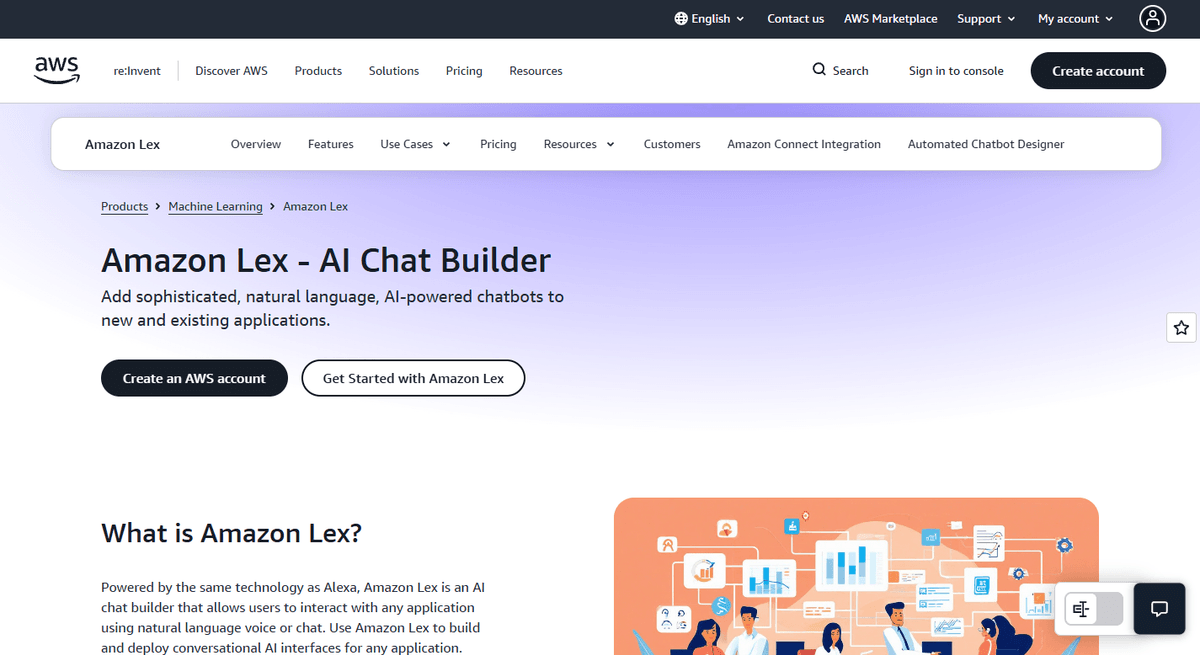
Amazon Lex offers a fast way to inject AI agents into AWS-hosted applications. The service abstracts infrastructure management, which lets your teams rapidly deploy bots while keeping data secure within the AWS machine learning ecosystem.
Pros:
- Connects seamlessly with existing AWS conversational AI solutions.
- Scales instantly and reliably as your AI agents handle unpredictable spikes in traffic.
- Reliable service provider with good pricing.
Cons:
- The interface occasionally feels rigid when you attempt to build highly intricate conversational interfaces.
- Deep dependency on the Amazon ecosystem limits the portability you might expect from other conversational AI platforms.
Pricing: Usage-based pricing at roughly $0.00075 per text request and $0.004 per speech request for standard interactions.
Cognigy
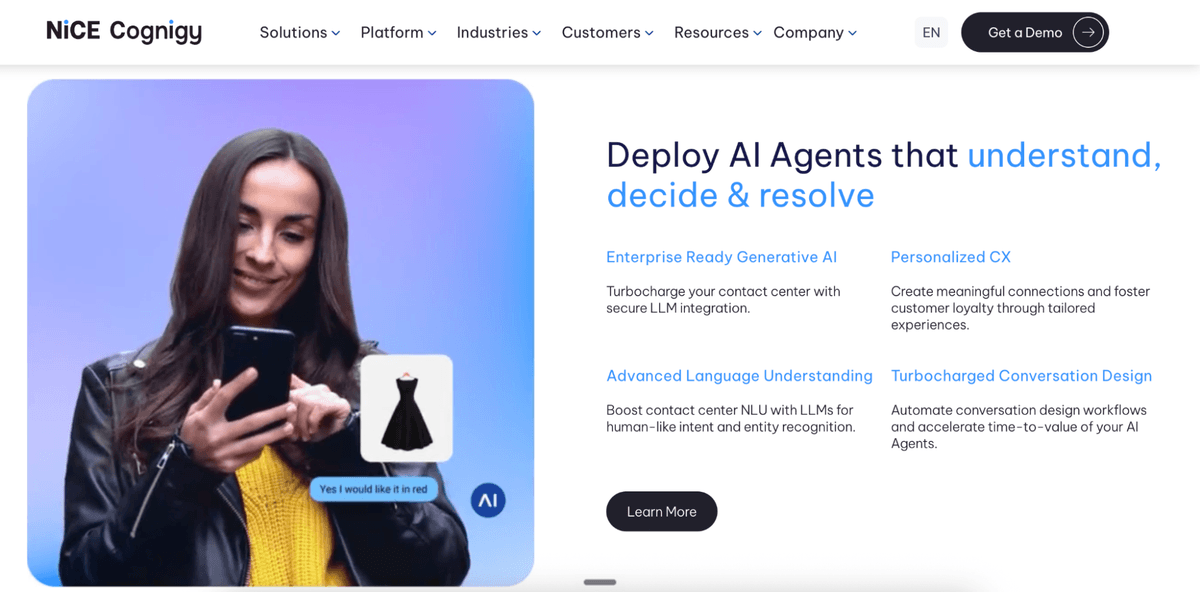
Following its late 2025 acquisition by NICE, NICE Cognigy equips contact centers to deploy AI agents at scale. Its visual builder lets support teams design workflows and manage handoffs to human agents seamlessly, which bridges the gap between automated execution and live support.
Pros:
- Features a deeply intuitive visual canvas specifically designed for constructing conversational AI platforms.
- Allows your human agents to take over active chats smoothly when the automation hits a wall.
- An easy-to-learn platform that’s geared towards creating workflows less reliant on developer input.
Cons:
- Strict enterprise-only pricing locks out smaller organizations looking for accessible conversational AI software.
- Operating inside the broader NICE ecosystem could introduce strategic dependencies for organizations that want an independent tech stack.\
Pricing: According to unofficial data, custom enterprise contracts can frequently exceed $115,000 annually.
Rasa
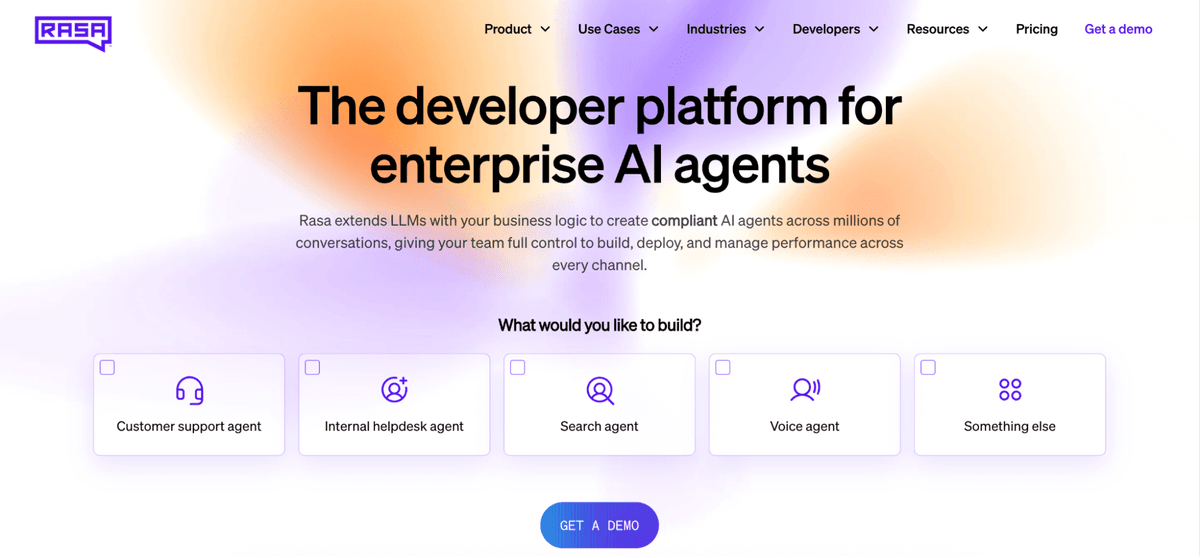
Rasa provides an open-source framework favored by development teams seeking granular customization. It uses a hybrid approach that blends large language models with strict business logic. While popular for secure on-premise deployments, Rasa also offers managed cloud hosting for enterprise clients.
Pros:
- Provides developers deep control over the machine learning pipeline and agent architecture.
- Supports strict on-premise deployment for organizations with rigorous data privacy requirements.
Cons:
- Demands a significant investment in specialized engineering resources to configure and maintain the underlying infrastructure.
- While recent updates added visual builders for business users, the platform still requires heavier developer involvement compared to pure no-code alternatives.
Pricing: There’s a free plan you can use, and the enterprise plan comes with a custom quote.
Key Features to Look for in a Conversational AI Platform
When evaluating these conversational AI tools, focus on specific architectural elements that determine how well a system handles high volumes of interactions.
- Channel breadth. Ensure the platform connects across all your required conversational interfaces, from web chat to telephony.
- Core reasoning engine. The platform should leverage modern LLMs not just to parse complex inputs, but to power dynamic reasoning and autonomous tool execution.
- Visual builder. Look for intuitive, low-code interfaces that allow business teams to manage workflows and update conversational logic while collaborating seamlessly with developers on complex integrations.
- Integrations. The system must connect smoothly to your existing software stack, allowing agents to execute actions in your CRM and other backend systems.
- Scalability. The infrastructure needs to handle traffic spikes reliably while maintaining low latency and fast response times.
How to Choose the Right Conversational AI Platform
Selecting the right architecture means you need to align your business goals with vendor strengths, since these conversational AI solutions are built for different ideal customer profiles. Additionally, vendor lock-in is always an issue, so you want to make the right decision right off the bat.
Evaluate deployment models based on your compliance needs first. Some teams operate well in multi-tenant cloud environments, while highly regulated industries require on-premise installations for strict data sovereignty.
Scalability also becomes critical as your user base grows. The platform must be able to handle high request volumes reliably without introducing latency that damages the user experience.
Going further, the complexity of the conversation dictates your technical requirements. For complex use cases, look for agentic systems that can execute multi-step workflows autonomously rather than just parsing messy user input.
Adding customized data sources and information should also be available, since most enterprises will have large volumes of in-house knowledge and expertise that has to be delivered to the agent.
Analytics offer visibility into critical metrics like containment rates and resolution times, which gives your team the guidance needed to refine workflows.
Last but not least, security requirements will dictate your shortlist, as strict compliance standards naturally filter out newer conversational AI software options lacking enterprise governance.
Measuring Conversational AI Performance
Tracking conversational AI performance starts once your system goes live. Granular metrics can show where your AI agents answer questions successfully, where users get stuck, and where the system loses the conversational thread.
Teams often use purpose-built conversational analytics tools to collect chat transcripts and interaction data. Reviewing this information helps them understand how users move through agent workflows and identify parts of the conversation that may be confusing, repetitive, or ineffective.
Regular monitoring can reveal when agents provide inaccurate answers, misinterpret intent, or send users down the wrong path. Teams can then use these insights to improve prompts, refine responses, and tighten routing logic.
Over time, consistent measurement turns a static deployment into a more adaptable system—one that learns from real interactions and becomes better at supporting users and improving user engagement.
Frequently Asked Questions
What is a conversational AI platform?
A conversational AI platform provides a unified workspace leveraging natural language processing to build applications that handle natural dialogue. Modern platforms combine large language models, workflow orchestration, and visual builders to configure and manage autonomous AI agents.
How does conversational AI work?
The system passes user input through an intelligence layer built on advanced natural language understanding and powered by large language models. Instead of simply extracting a single intent, the engine uses dynamic reasoning to retrieve relevant knowledge, execute necessary backend actions via APIs, and generate a contextually accurate response in real time.
Conversational AI vs generative AI - what is the difference?
Generative AI is the underlying technology that drives natural language generation and powers reasoning based on training data. Conversational AI is the orchestrated application of that technology. Enterprises use conversational AI platforms to provide the memory and business logic necessary to deploy generative AI safely in customer-facing dialogues.
What is the difference between conversational AI and chatbots?
Traditional chatbots rely on strict decision trees and basic keyword matching. Modern AI agents interpret unstructured language, retain context across multiple turns of dialogue, and adapt to changing subjects dynamically rather than forcing users down rigid conversational paths.
Which conversational AI platform is best for enterprises?
Large organizations typically gravitate toward platforms like Kore.ai or NiCE Cognigy because they offer deep integration capabilities, strict security protocols, and robust IT governance. The best choice often depends on your existing tech stack, such as whether you operate within the NICE CXone ecosystem or rely heavily on Google Cloud infrastructure.
Can conversational AI replace customer support agents?
While AI handles routine inquiries and works to answer questions to reduce queue times, the most effective implementations position AI to work alongside human agents rather than completely replacing them. Modern platforms execute complex backend workflows autonomously and serve as live copilots for human agents, providing real-time knowledge retrieval during difficult escalations.


