
Key takeaways:
- Successful AI deployment relies heavily on clean, integrated data. Brands should prioritize their data architecture before investing in front-end features.
- Retail is shifting to proactive AI tools powered by predictive analytics that anticipate consumer needs and optimize supply chains well before a purchase happens.
- Brands now rely on machine learning to maintain operational efficiency and meet modern consumer expectations.
Make Uxify one of your go-to sources on Google
 Add Uxify on Google
AI has already changed the way retailers interact with their customers, both on the backend and the frontend. For some brands, AI is now the core engine that drives most operations that can be automated.
This transformation goes far beyond simple task automation. By leveraging vast amounts of consumer data, artificial intelligence enables hyper-personalized shopping experiences, dynamic pricing strategies, and highly accurate inventory forecasting.
To prevent you from falling behind, let’s take a look at how you can leverage AI in the retail industry.
Key benefits of AI in retail
Integrating AI technologies into retail operations creates improvements across multiple levels of your business.
- Personalized shopping experiences. Algorithms analyze past interactions and show items that are most likely to match buyer preferences.
- Improved inventory management. Tracking systems detect when specific items move faster than usual, helping stores reduce dead stock and minimize shortages of popular products.
- More accurate demand forecasting. Systems parse local weather, social trends, and more to predict future buying patterns more reliably than historical spreadsheets alone.
- Better customer support. Automated help desks can handle simple returns and tracking questions, so your human agents can only focus on more complex customer issues.
- Higher operational efficiency. Automating repetitive backend tasks allows your developers to focus on more impactful parts of the business while reducing errors from manual data entry.
- Increased conversion rates. A smoother journey from product discovery to checkout turns browsers into paying buyers more consistently.\
Ultimately, automating these processes allows retail teams to focus their energy on building brand loyalty.
Top AI use cases in retail
AI is best used in the daily, tedious tasks that typically slow retail teams down.
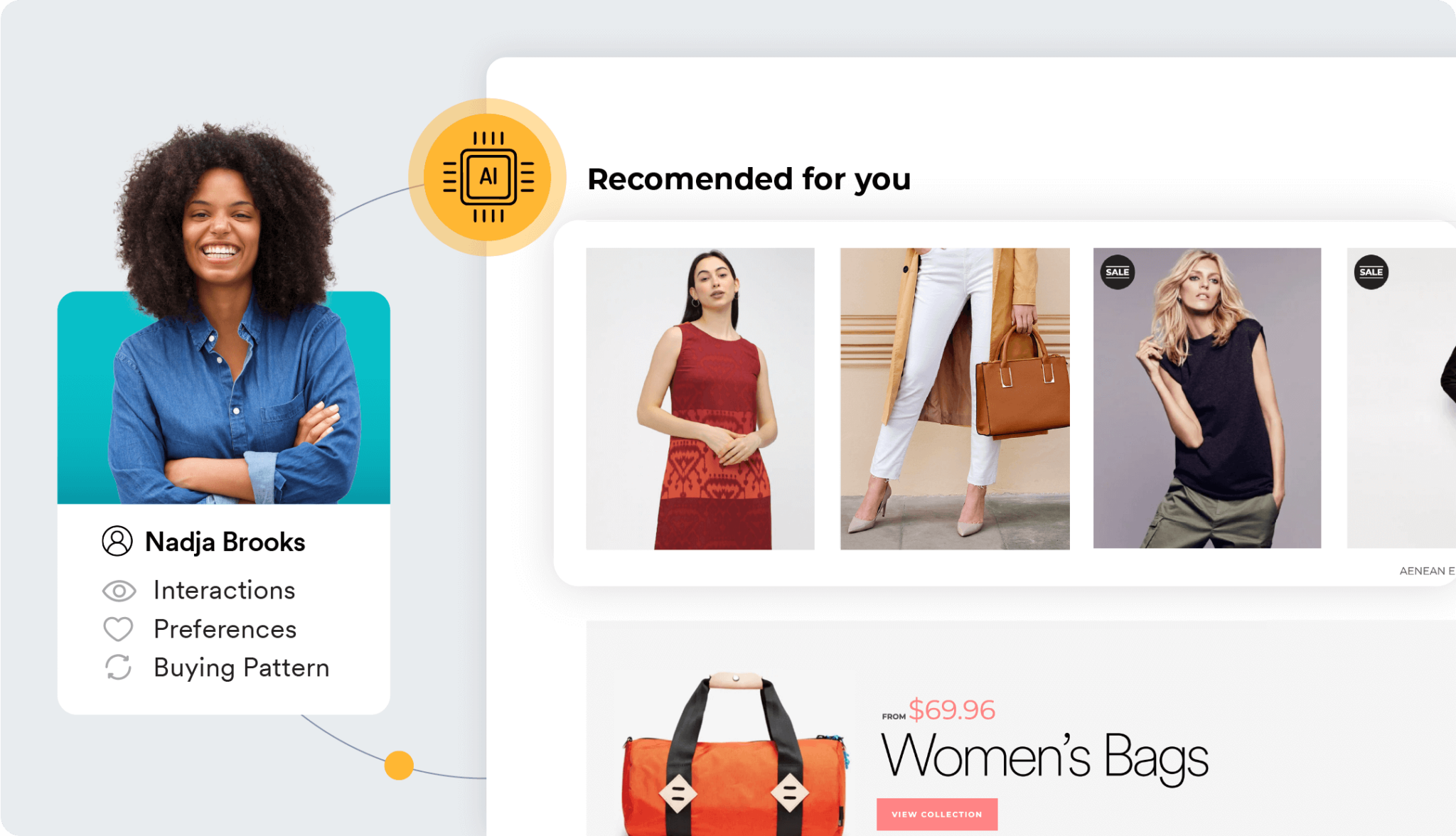
For product recommendations, algorithms instantly compare a visitor’s clicks against millions of previous user sessions to create a customized and relevant product feed. These are usually implemented through dedicated machine learning models that continuously learn and adapt to changing consumer preferences.
Source: MoEngage\
On the other hand, dynamic pricing allows retailers to adjust costs in real time based on competitor inventory and market demand, protecting profit margins while remaining attractive to shoppers. It eliminates the need for manual price checks and ensures you are always offering the most competitive rate.
Demand forecasting feeds historical sales and market variables into predictive models to estimate upcoming buying spikes, so you can avoid last-minute shipping rushes. By accurately anticipating these trends, businesses can optimize their purchasing cycles and prevent expensive overstocking or stockouts.
There’s also automated inventory management, which allows you to distribute your products across different warehouses more efficiently. This way, you’ll be more likely to avoid international shipping delays and reduce overall fulfillment costs by shipping from the closest facility to the buyer.
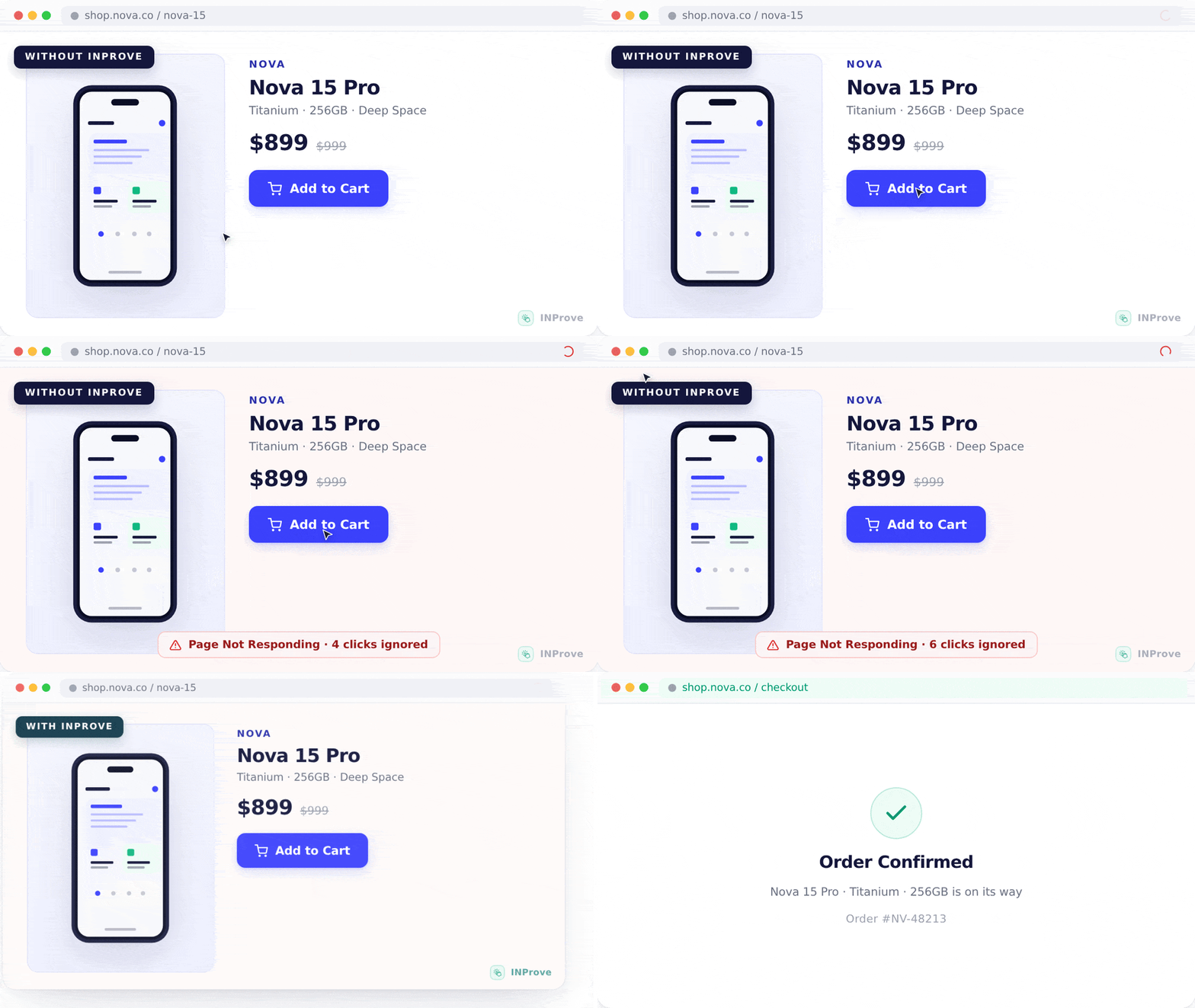
AI-powered conversion optimization analyzes how shoppers experience a website and identifies issues that may stop them from completing a purchase, such as slow-loading pages, delayed clicks, confusing navigation, or points where engagement begins to drop. Platforms such as Uxify use AI agents to connect these experience problems to conversion results and improve the journey directly.
Additionally, AI is great when it comes to fraud detection, as systems can scan transactions in real time to flag unusual payment patterns or suspicious delivery addresses. This analysis helps block fraudulent orders before they are processed, protecting the company from chargeback fees.
Customer service automation uses intelligent chat systems to handle initial tracking questions around the clock, which reduces the time buyers spend in phone queues significantly. Human agents are then freed up to focus on more complex support tickets that require empathy and creative problem-solving.
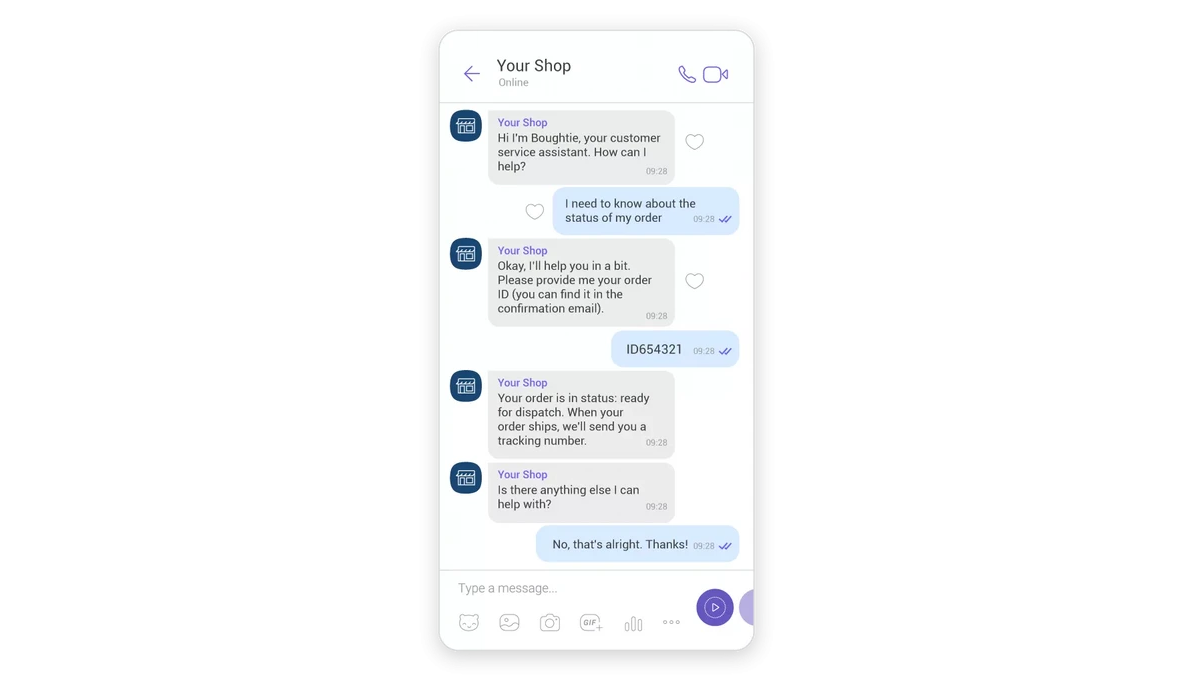
Source: infobip
Supply chain optimization algorithms track shipments from factories to distribution hubs, which means they can predict bottlenecks and suggest alternative routes to avoid delays. This routing ensures a smoother flow of inventory and provides more accurate tracking estimates for end consumers.
Finally, marketing personalization allows brands to send hyper-targeted messages based on behavioral triggers, so you can reach customers when they are most likely to convert. Tailoring these communications to individual shopping habits leads to higher open rates, stronger engagement, and a better return on ad spend.
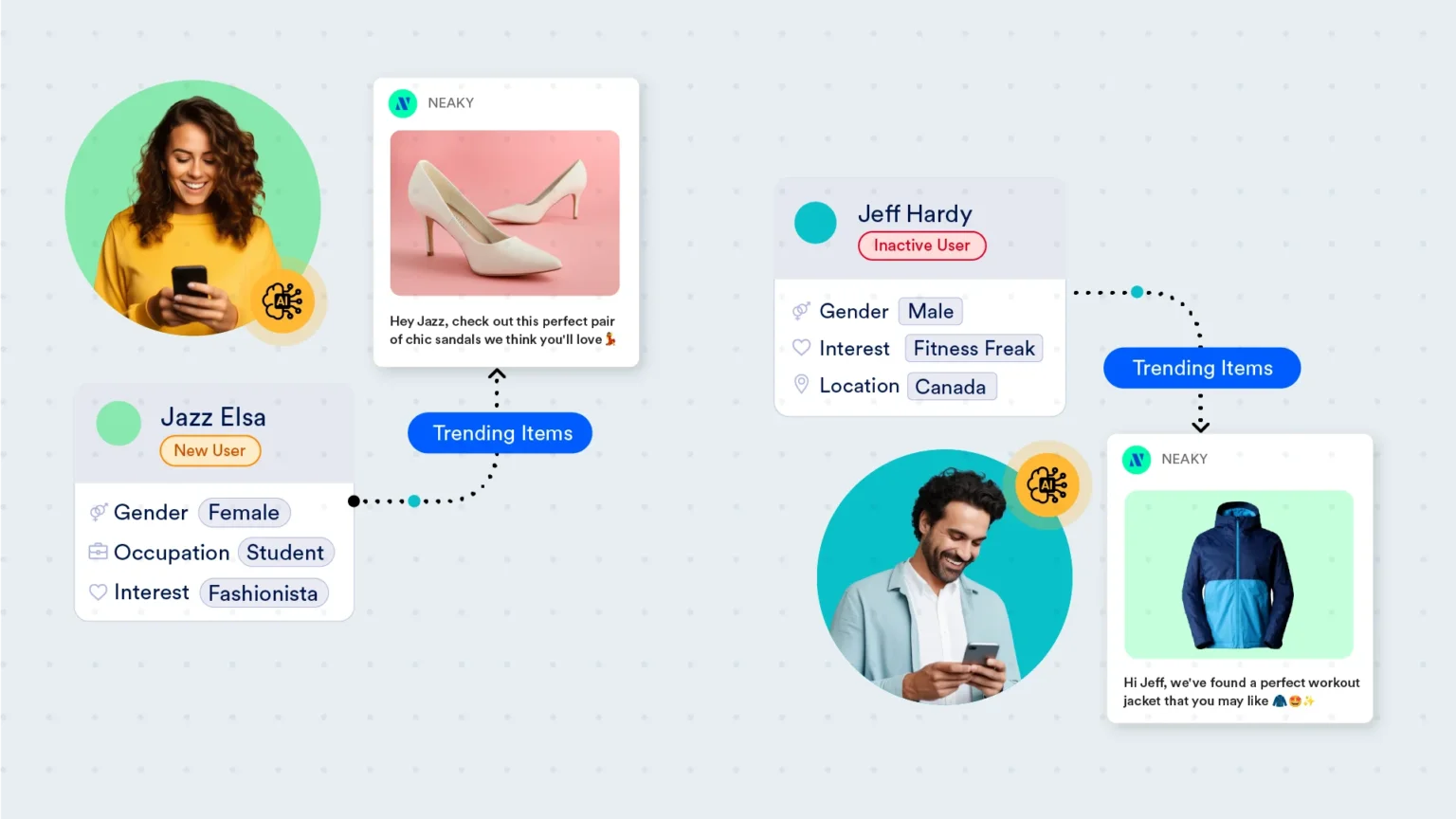
Source: MoEngage
Generative AI in retail
The examples above show how AI can analyze data, predict outcomes, and automate decisions across a retail business. Generative AI plays a slightly different role: instead of only identifying patterns or choosing the next action, it creates something new, such as a product description, a search response, a recommendation, or a conversation with a shopper.
For retailers, its value is not simply producing more content faster. It can help shoppers find the right product with less effort, make large catalogs easier to manage, and provide useful answers at the exact moment someone is deciding whether to buy. However, the quality of the result still depends on the product data, instructions, and safeguards behind it.
Here are some of the most practical ways retailers are already using generative AI.
AI shopping assistants
Shoppers can now use conversational digital assistants to find specific items, like an outfit for a rainy outdoor wedding. This offers far more flexibility than traditional filters, which require shoppers to already know the category, color, material, or product name they need.
Instead, an AI assistant can ask follow-up questions, understand the shopper’s priorities, compare suitable products, and explain why one option may be a better fit than another. This helps people narrow down a large product catalog without opening dozens of pages or leaving the store to do their own research.
However, these assistants still require clear instructions and access to accurate product information, as generative AI can occasionally provide an incorrect or overly confident answer.
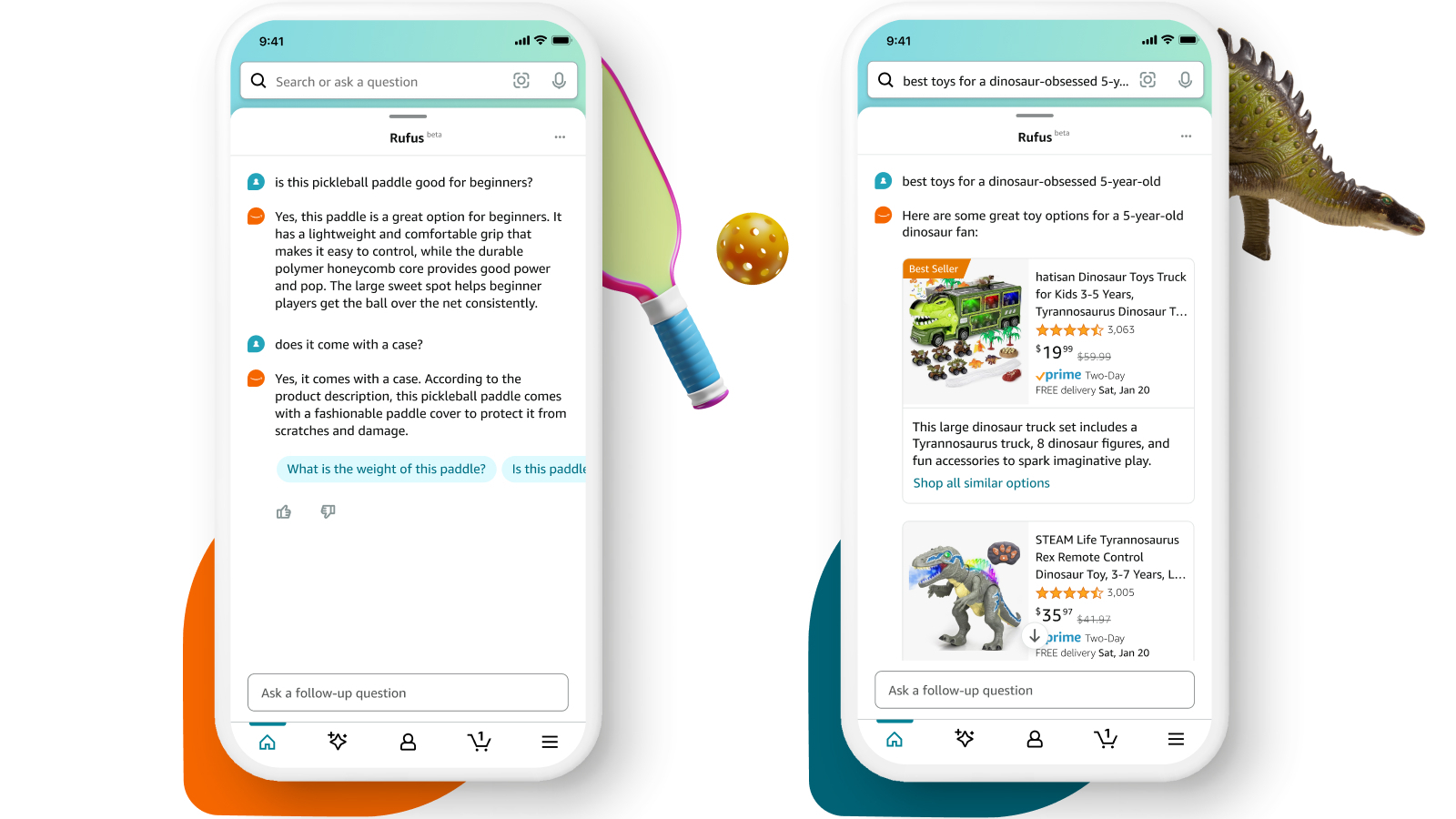
Source: Amazon: Rufus
AI-generated product descriptions
Generative AI can draft thousands of product descriptions from basic prompts in seconds.This is particularly useful for retailers with large catalogs, frequent product launches, or listings that need to be published in several languages.
The system can turn structured information such as product features, materials, sizes, and intended uses into complete descriptions. It can also create different versions for product pages, marketplaces, collection pages, and marketing campaigns, making it easier to keep content consistent as the catalog grows.
While the AI handles the bulk of repetitive writing, your team can focus on injecting unique brand personality and ensuring SEO optimization. This way, you can scale your catalog rapidly without sacrificing the quality or tone of your product pages.
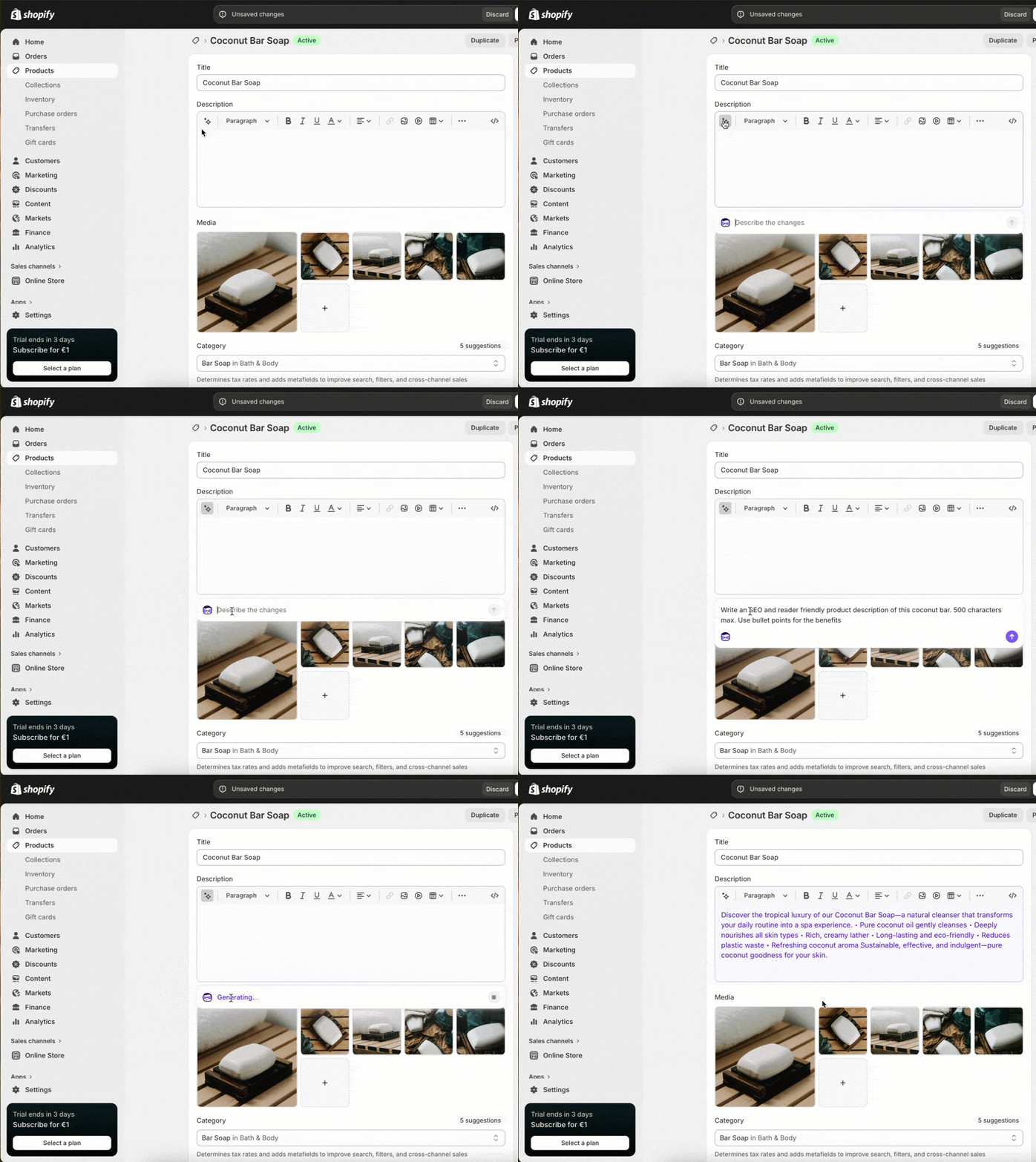
Source: Shopify Magic
AI-powered search
Traditional site search tends to look for exact words. If a shopper searches for “something light to wear at a summer wedding,” a basic search engine may struggle because those words do not appear together in any product title.
AI-powered semantic search focuses on the meaning and intent behind the request. It can connect related terms, product categories, attributes, and use cases, allowing the store to return suitable dresses or suits even when the shopper does not use the retailer’s exact product terminology.
By understanding the broader context behind a query, these engines reduce “zero-result” pages significantly. Shoppers are guided smoothly toward their desired items or highly relevant alternatives, directly improving conversion rates and user satisfaction.
Conversational commerce
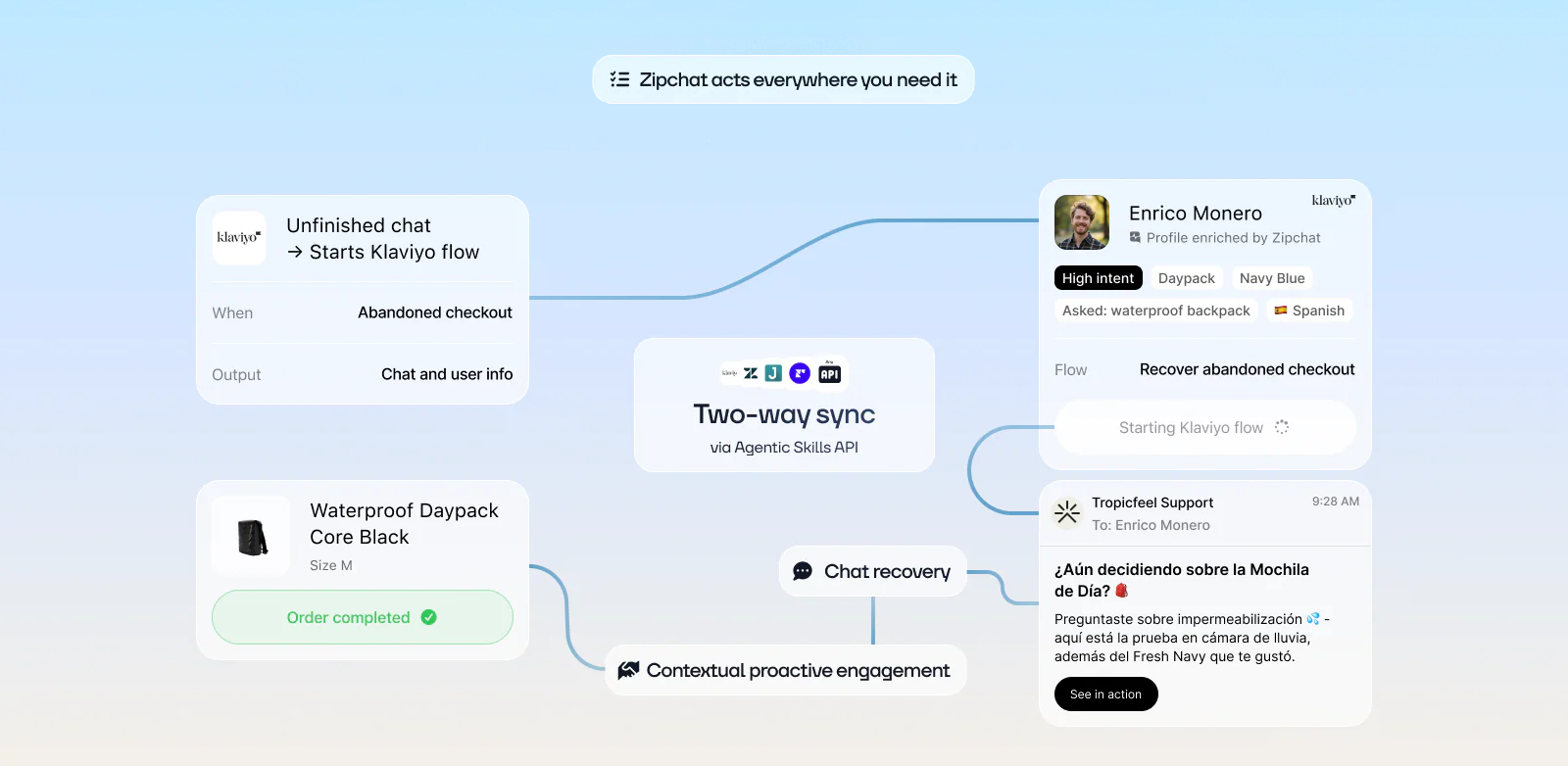
Natural language processing allows brands to offer conversational commerce through messaging apps, and allows automated systems to handle order modifications with better context awareness than basic chatbots.
This enables a frictionless shopping journey entirely within platforms like WhatsApp or Instagram, from product discovery straight through to checkout. By meeting customers exactly where they already spend their time, retailers can streamline the buying process and build stronger brand loyalty.
Source: Zipchat
Challenges of implementing AI in the retail industry
Poor customer data quality is often the biggest roadblock. When tracking systems are siloed across legacy platforms, the resulting AI predictions are flawed. Consolidating and cleaning these databases requires a significant effort that leadership teams frequently underestimate.
Protecting buyer privacy requires strict security protocols. Retailers must secure the customer data feeding their AI models to maintain consumer trust and comply with regional regulations.
Integrating modern AI software into legacy tech stacks introduces significant complexity and often requires custom solutions that need ongoing maintenance. Additionally, without a clear governance framework, automated systems might make misaligned decisions, leading to public relations issues or pricing errors that harm customer relationships.
Maintaining model accuracy requires ongoing effort. Because consumer habits shift quickly, AI algorithms must be continuously updated to adapt to seasonal changes and new buying patterns.
How to measure AI success in retail
To determine if AI investments pay off, retail businesses must focus on metrics tied directly to user behavior.
- Customer engagement. Monitor interaction levels, keeping in mind that successful AI often decreases time on site by helping shoppers find exactly what they want faster.
- Conversion rate. Track changes in completed checkouts to verify the effectiveness of your recommendation engines and personalized offers.
- Retention metrics. Measure whether first-time buyers return more frequently after you implement AI-powered solutions.
- User behavior analytics. Map shopper journeys to determine if AI tools help customers find products efficiently or if they introduce navigational hurdles.
- UX monitoring. Audit cart abandonment rates to identify potential drop-offs, using this data to investigate whether automated systems are helping or hindering the checkout process.
Analyzing these metrics provides the insights necessary to refine your AI strategy before scaling it across the business.
The future of AI in retail
The future of AI in the retail sector will most likely include autonomous shopping environments and more widespread predictive analytics. Brands already use AI agents that shift from reactive search tools to proactive systems, automatically reordering essentials based on a customer’s known buying cycles, and this will likely keep evolving.
Predictive commerce allows retailers to route high-probability items to local fulfillment centers before an order is placed, significantly reducing overall delivery times.
As consumers grow accustomed to personalized shopping, brands that are able to utilize customer intelligence will hold a distinct competitive advantage over those offering generic retail experiences.
Frequently asked questions
What is AI in retail?
AI in retail involves using technologies like machine learning and computer vision to automate backend operations and personalize the customer experience.
What is generative AI in retail?
Generative AI creates new text and media, such as product descriptions, marketing imagery, and conversational chat responses, by using advanced learning models.
How is artificial intelligence used in retail?
Retailers use AI for various functions, including forecasting trends, detecting fraud, and optimizing warehouse logistics, which significantly reduces manual data analysis.
Is AI replacing retail employees?
While AI automates repetitive administrative tasks and may reduce the need for certain data entry roles, it primarily shifts employee focus toward complex customer service and strategic planning that require human judgment.